
Navigating the world of professional illumination can feel overwhelming, but we are here to simplify your journey. Whether you are planning a commercial project or upgrading a public space, understanding the technical standards is essential for success.
We provide expert guidance on smart solutions to ensure your environment is perfectly illuminated. By mastering these classification systems, you can enhance both the functionality and aesthetic appeal of any area you design.
If you need personalized support, our team is ready to help you navigate these complexities with confidence. Reach out to us at www.imltled.cn, email info@imltled.cn, or contact us via WhatsApp at 0086 185 8848 3178 to get started today.
Key Takeaways
- Standardized classifications help ensure consistent performance across all your projects.
- Proper selection improves the visual comfort and safety of your outdoor spaces.
- We offer expert consulting to simplify complex technical lighting requirements.
- Effective planning balances energy efficiency with high-quality output.
- Our team is available to provide direct support for your specific design needs.
Understanding IESNA Light Distribution Standards
We believe that mastering the technical side of lighting starts with understanding established professional frameworks. When you choose the right light fixtures for your home or business, you are relying on a system designed to provide clarity and comfort.
What is IESNA?
The Illuminating Engineering Society of North America, or IESNA, serves as the primary authority on illumination. This organization is dedicated to improving lighting quality through extensive research and development.
By setting rigorous lighting standards, they provide a reliable roadmap for engineers and designers. Their work ensures that every product meets specific performance benchmarks before it reaches the market.
Importance of IESNA Standards
These guidelines are essential for creating environments that are both safe and energy-efficient. By following these protocols, we can effectively minimize light waste while maximizing visibility in outdoor and commercial spaces.
Understanding these classifications is the first step toward selecting the most efficient hardware for your specific needs. The following table highlights why these standards remain vital for modern design:
| Benefit Category | Primary Goal | Impact on Design |
|---|---|---|
| Safety | Reduce glare and shadows | Enhanced visibility |
| Efficiency | Optimize power usage | Lower operational costs |
| Consistency | Uniform light spread | Predictable performance |
Ultimately, these IESNA protocols empower you to make informed decisions. Whether you are upgrading a parking lot or a retail storefront, these lighting standards ensure your light fixtures perform exactly as intended.
Introduction to NEMA Light Distribution
Achieving the perfect beam spread for your project starts with a solid grasp of NEMA Light Distribution. By utilizing these industry-standard guidelines, we can ensure that every fixture performs exactly as intended in your specific environment.
Whether you are working on a large industrial site or a detailed architectural project, these standards provide the clarity needed for success. Let’s explore how these classifications help simplify your lighting design process.
Overview of NEMA
The National Electrical Manufacturers Association, or NEMA, represents the backbone of electrical and medical technology manufacturing in the United States. This organization sets the benchmarks that professionals rely on to maintain safety and quality across various sectors.
By establishing a consistent lighting classification system, they allow manufacturers and designers to speak the same language. This uniformity is what makes modern, high-performance lighting possible for everyone.
NEMA’s Role in Lighting Design
NEMA plays a vital role in lighting design by providing a standardized method for categorizing floodlights and spotlights. We use these specific classifications to ensure that your lighting setup meets rigorous professional performance criteria.
Following these guidelines helps us achieve the precise beam spread required for your unique application. With a reliable lighting classification, you can trust that your NEMA Light Distribution strategy will deliver consistent, high-quality results every time you implement a new lighting design.
Comparison of IESNA and NEMA Light Distribution
We often find that selecting the perfect lighting solution depends on balancing broad coverage with precise intensity. While both systems aim to improve lighting quality, they serve different purposes in the industry. Understanding these nuances allows us to recommend the best light fixtures for your specific goals.
Key Differences
The primary distinction lies in the intended application of the light. IESNA distribution types are primarily used for outdoor area lighting, such as roadways and walkways, where wide, uniform coverage is essential for safety. In contrast, NEMA Light Distribution focuses on high-intensity, directional beams.
This makes NEMA standards ideal for floodlighting or specialized tasks where you need to highlight a specific object or area. By choosing the right standard, you ensure that your light fixtures perform exactly as needed for your unique environment.
Similarities
Despite their different applications, both standards share a common commitment to efficiency and performance. They provide a structured framework that helps engineers and designers achieve consistent results across various projects. Whether you are using IESNA or NEMA Light Distribution, the goal remains the same: to create a safe, well-lit space that meets modern standards.
| Feature | IESNA Standards | NEMA Standards |
|---|---|---|
| Primary Use | Roadways & Walkways | Floodlighting & Spotlights |
| Beam Focus | Broad & Uniform | High Intensity & Narrow |
| Design Goal | Area Coverage | Targeted Illumination |
| Efficiency | High for Large Spaces | High for Specific Tasks |
Types of IESNA Light Distribution
When designing for the outdoors, selecting the right IESNA distribution type ensures that every lumen serves a specific purpose. We categorize these patterns to help you direct light exactly where it is needed most, whether you are illuminating a vast parking lot or a narrow garden path.
Effective outdoor lighting relies on these precise classifications to balance safety and visual comfort. By choosing the correct distribution, you can minimize light pollution while maximizing the utility of your fixtures.
Direct Lighting
Direct lighting focuses the majority of the light output downward toward the target surface. This method is highly efficient for task-oriented areas where visibility is the top priority.
For instance, Type I distribution is specifically designed for long, narrow areas like pathways and sidewalks. By concentrating the beam, we ensure that pedestrians have a clear, well-lit route without wasting energy on surrounding foliage.
Indirect Lighting
Indirect lighting directs the light upward or toward reflective surfaces, such as ceilings or walls. This approach creates a soft, diffused glow that is perfect for architectural highlights or creating a welcoming atmosphere.
“Lighting is the most powerful tool in the architect’s kit, capable of transforming a space from a mere structure into an experience.”
By bouncing light off surfaces, we significantly reduce harsh glare and deep shadows. This technique is often favored in high-end residential projects where comfort and aesthetics are just as important as functionality.
Semi-Direct and Semi-Indirect
Semi-direct lighting provides a balance by casting most of the light downward while allowing a small portion to illuminate the ceiling or upper walls. This hybrid approach helps to brighten the entire space, making it feel more open and inviting.
Conversely, semi-indirect lighting focuses more on upward illumination while still providing enough downward light for basic visibility. These versatile options allow us to tailor the mood of your environment while maintaining optimal safety standards for all users.
Types of NEMA Light Distribution
When it comes to outdoor illumination, NEMA provides a robust framework to help you direct light exactly where it is needed most. By utilizing a standardized lighting classification system, we can ensure that your fixtures deliver the perfect balance of intensity and distance for any environment.
This systematic approach simplifies the design process for both homeowners and business owners. Whether you are lighting a small garden or a large industrial yard, understanding these patterns is the key to precision performance.
Type A
Type A represents the most focused beam pattern within the NEMA Light Distribution standards. It is designed for applications requiring a very narrow beam spread, typically ranging from 10 to 18 degrees.
This type is ideal for long-distance projection where you need to highlight specific architectural features or signage from a significant distance. Its intense concentration of light ensures that your target remains clearly visible without wasting energy on surrounding areas.
Type B
Moving into the medium-narrow category, Type B offers a slightly wider spread than Type A, usually between 18 and 29 degrees. This classification is a popular choice for general floodlighting tasks where a bit more coverage is necessary.
We often recommend this type for illuminating mid-sized facades or pathways. It provides a reliable and balanced output that maintains high intensity while covering a broader surface area than the narrowest options.
Type C
Type C falls into the medium beam category, featuring a spread between 29 and 46 degrees. This lighting classification is incredibly versatile for various outdoor settings, including parking lots and recreational spaces.
By choosing Type C, you benefit from a wider wash of light that creates a safe and welcoming environment. It is a highly efficient solution for projects that prioritize uniform coverage over extreme distance, making it a staple in modern NEMA Light Distribution design.
Applications of IESNA Light Distribution
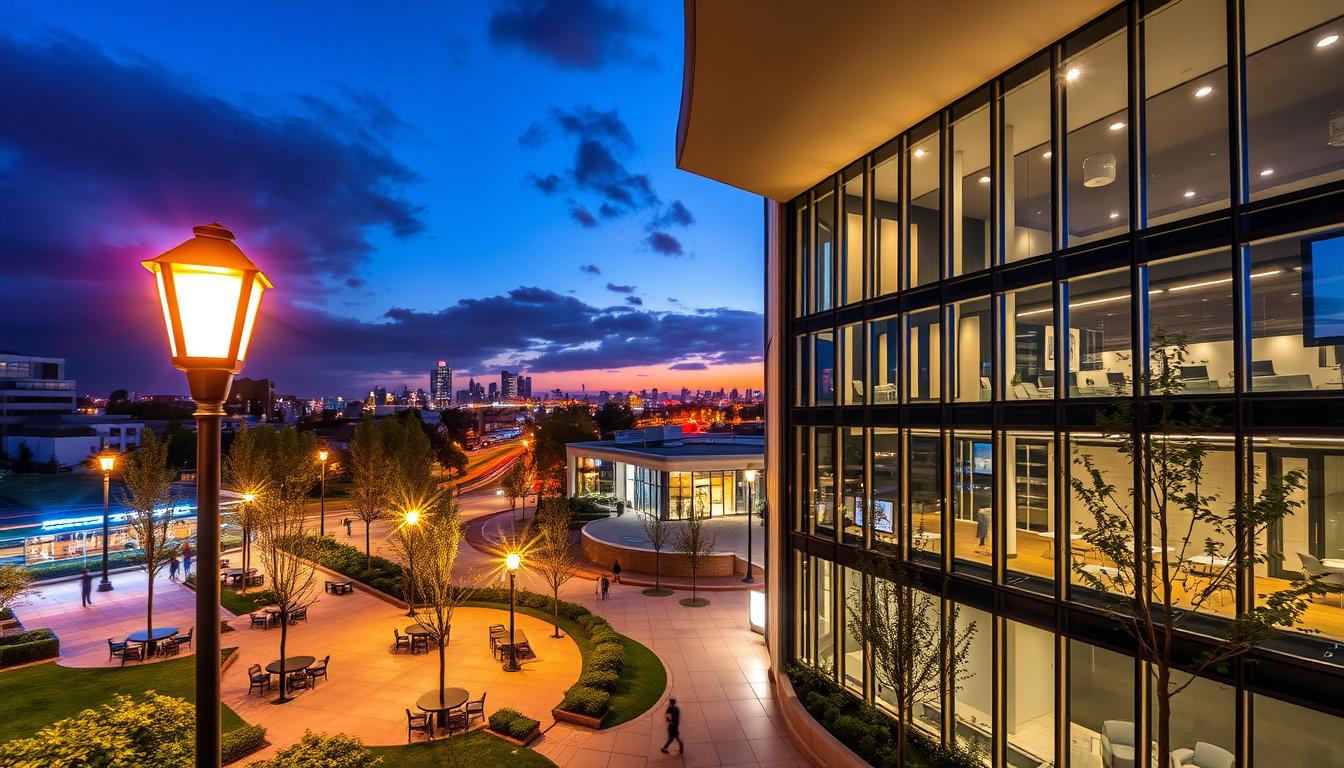
Whether you are lighting a parking lot or a living room, IESNA standards provide the blueprint for success. We believe that proper illumination is the foundation of any functional space. By tailoring light distribution to specific needs, we ensure that your environment remains both safe and visually appealing.
Commercial Spaces
In the professional world, lighting must be as productive as the people working within it. We apply IESNA guidelines to design robust outdoor lighting systems for large areas like parking lots and roadways. These patterns minimize glare while maximizing visibility for drivers and pedestrians alike.
Inside the office, our focus shifts to creating a balanced atmosphere. We utilize specific distribution types to reduce eye strain and improve focus. This approach ensures that your workspace remains a hub of efficiency throughout the day.
Residential Applications
Your home deserves the same level of precision as a high-end commercial project. We use IESNA principles to enhance your indoor lighting, creating warm and inviting zones for relaxation. Whether it is task lighting in the kitchen or ambient glow in the living room, we make it simple.
Beyond the front door, we extend these standards to your exterior pathways and gardens. High-quality outdoor lighting not only boosts your home’s curb appeal but also provides essential security. We are here to help you illuminate your dream life with ease and confidence.
Practical Uses of NEMA Light Distribution
We often rely on NEMA specifications to transform how industrial and outdoor spaces are illuminated. By utilizing standardized NEMA Light Distribution patterns, we ensure that every corner of your facility receives the exact intensity required for peak performance.
Industrial Settings
In large-scale manufacturing plants, precision is everything. We apply specific beam spreads to provide high-intensity floodlighting that minimizes shadows and enhances worker safety.
While many people focus on exterior needs, high-quality indoor lighting is equally vital for complex assembly lines. Our approach ensures that your team can operate with confidence, knowing that the light is distributed exactly where it is needed most.
Outdoor Lighting Solutions
Outdoor environments demand durability and wide-reaching coverage. We use NEMA patterns to create uniform brightness across parking lots, loading docks, and perimeter fences.
“Effective lighting design is not just about brightness; it is about the strategic placement of light to serve human activity and safety.”
The following table outlines how different beam spreads serve various operational needs:
| NEMA Type | Beam Spread | Primary Use Case |
|---|---|---|
| Type 2 | Narrow | Long-range security lighting |
| Type 4 | Medium | General area floodlighting |
| Type 6 | Wide | Large open space illumination |
By selecting the right NEMA classification, we help you reduce energy waste while maximizing visibility. This smart, simple approach ensures your infrastructure remains both efficient and compliant with modern standards.
Advantages of Using IESNA Standards
Achieving the perfect balance in your lighting requirements starts with a commitment to IESNA protocols. We prioritize these industry-leading standards to ensure that every project we touch delivers maximum performance and reliability. By aligning your setup with these guidelines, you gain a foundation built on precision and professional excellence.
Enhanced Safety
Proper light distribution is the cornerstone of a secure environment. When you follow IESNA standards, you effectively minimize harsh glare that often leads to visual fatigue. This careful approach ensures that occupants can navigate spaces comfortably without the strain caused by poor illumination.
By controlling where the light falls, we help you eliminate dark spots and dangerous shadows. This creates a safer atmosphere for both residential and commercial users. A well-lit space is not just about brightness; it is about clarity and consistency in every corner.
Improved Energy Efficiency
Adopting these standards offers significant benefits for both your budget and the environment. We focus on reducing light waste by directing photons exactly where they are needed most. This sustainable approach ensures that you get the most out of every watt consumed.
Optimizing your system leads to lower operational costs and a smaller carbon footprint. We are dedicated to helping you create a lighting solution that is as cost-effective as it is innovative. Efficiency is at the heart of everything we design for your home or business.
| Benefit Category | Primary Advantage | Impact on User |
|---|---|---|
| Safety | Glare Reduction | Reduced Eye Strain |
| Efficiency | Waste Minimization | Lower Energy Bills |
| Sustainability | Resource Optimization | Eco-friendly Footprint |
| Performance | Uniform Distribution | Enhanced Visibility |
Benefits of NEMA Light Distribution
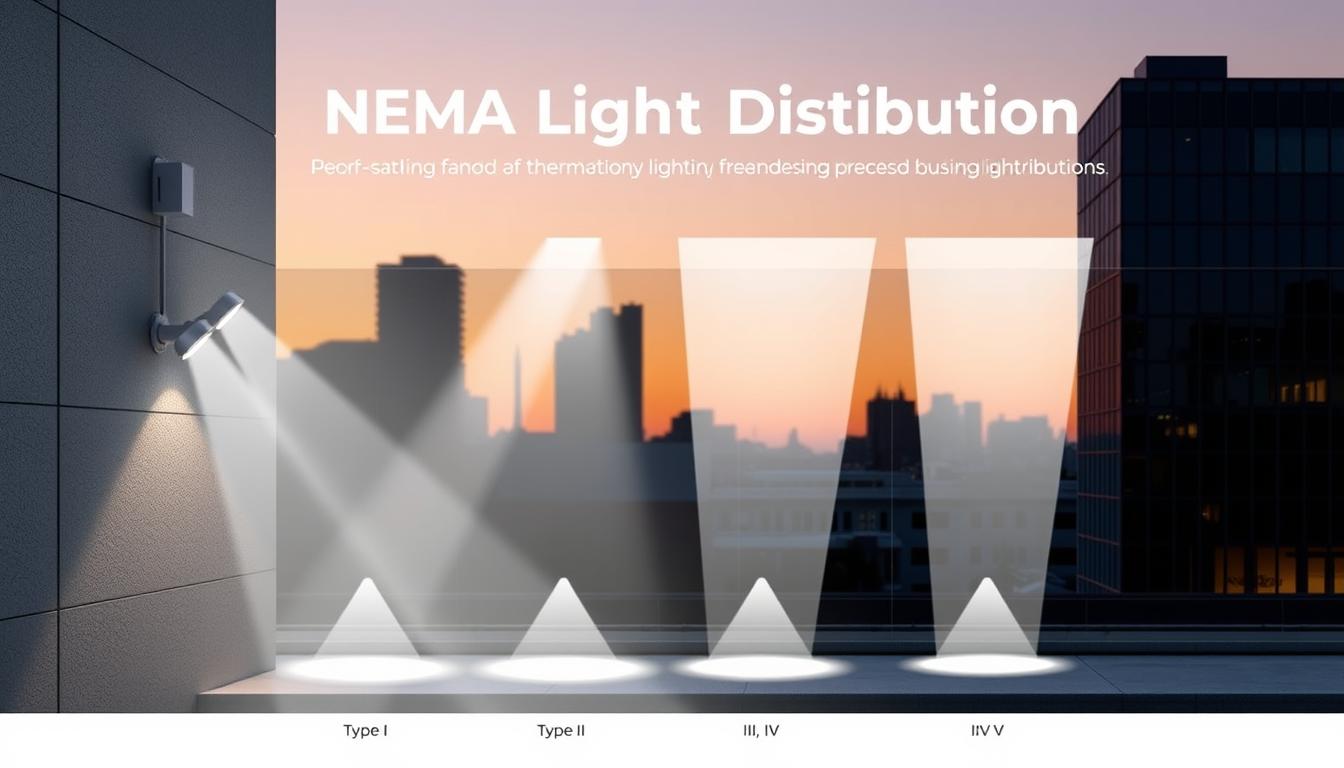
We believe that simplifying your project starts with clear, industry-standard metrics like NEMA ratings. By adopting these established guidelines, we help you transform complex technical challenges into straightforward solutions. This approach ensures that every fixture you select performs exactly as intended in your space.
Streamlined Design Process
The beauty of using NEMA ratings lies in their ability to provide a clear, universal code for light output. For instance, a rating like 4H acts as a shorthand that instantly communicates the specific distribution pattern of a luminaire. This clarity allows our team to make faster, more informed decisions during the planning phase.
By relying on these standardized metrics, we eliminate the guesswork often associated with fixture selection. You save valuable time, and we ensure that your lighting requirements are met with precision. This efficiency is a cornerstone of our commitment to making your life easier and your projects more successful.
Compliance and Regulation
Navigating the world of NEMA Light Distribution can feel overwhelming, but it is essential for project success. We use these ratings to guarantee that your installation remains fully compliant with local and national regulations. When your design aligns with recognized industry standards, you avoid costly delays and ensure a smooth approval process.
Our focus is on providing you with a seamless experience that balances innovation with strict adherence to safety codes. By integrating these standards early, we protect your investment and ensure long-term reliability. The following table highlights how these ratings help you manage your project needs effectively.
| NEMA Rating | Primary Use Case | Design Benefit |
|---|---|---|
| Type A | Narrow Beam | High-intensity focus |
| Type B | Medium Beam | Balanced coverage |
| Type C | Wide Beam | Broad area illumination |
Ultimately, choosing NEMA Light Distribution is about more than just meeting lighting requirements; it is about creating a professional, efficient, and safe environment. We are here to guide you through these technical details so you can focus on the big picture. Let us handle the complexity while you enjoy the brilliant results.
Challenges in Implementing Light Distribution Standards
Achieving the ideal balance between performance and practicality is the core challenge of modern lighting design. While we all aim for perfect illumination, real-world constraints often complicate the path to full compliance with established lighting standards.
Technical Limitations
Every space presents unique physical hurdles that can impact how we apply advanced lighting technology. Successfully implementing these systems requires careful consideration of mounting height and the total width of the area being lit.
If the mounting height is too low, the light distribution may become uneven, creating unwanted shadows. Conversely, excessive height can lead to light spill and reduced intensity at the ground level. We work closely with you to navigate these technical limitations, ensuring your setup remains both effective and precise.
Cost Considerations
We understand that budget management is just as important as the quality of your lighting technology. High-performance systems often come with a premium, but we believe that smart planning can bridge the gap between high standards and affordability.
Our team focuses on delivering innovative results that fit your specific financial goals without sacrificing safety or efficiency. By optimizing your layout, we help you meet essential lighting standards while keeping your project costs under control. We are here to make the transition to better lighting simple, efficient, and stress-free for your business or home.
Future Trends in Lighting and Design
We are witnessing a transformative era where lighting technology redefines how we perceive our environments. The future of illumination is bright, driven by rapid advancements that allow for greater precision and control. By staying at the forefront of these changes, we ensure that your spaces remain both functional and inspiring.
Innovations in IESNA and NEMA Standards
Modern lighting design is no longer just about visibility; it is about intelligence and adaptability. LED technology continues to evolve, offering us unprecedented flexibility in how we distribute light across various surfaces. These improvements are essential for meeting the rigorous demands of modern lighting standards.
As systems become more interconnected, we see a shift toward smart, automated controls. You can explore the technical foundations of these advancements by reviewing the latest research on efficient lighting systems. This data helps us bridge the gap between traditional methods and the next generation of smart infrastructure.
Sustainability in Lighting Solutions
Sustainability is at the core of our mission to provide responsible illumination. We prioritize solutions that minimize energy waste while maximizing output, ensuring that your footprint remains small. By integrating smart technology, we help you manage your energy consumption with ease and confidence.
Our commitment to the planet means we constantly seek out materials and designs that support long-term ecological health. We believe that responsible lighting is the key to a better future for everyone. Below is a summary of how these trends are shaping the industry.
| Trend Category | Current Focus | Future Outlook |
|---|---|---|
| Smart Integration | Basic Dimming | AI-Driven Adaptation |
| Energy Efficiency | LED Adoption | Zero-Waste Systems |
| Design Standards | Manual Compliance | Automated Regulation |
How to Choose Between IESNA and NEMA
Selecting the ideal distribution standard transforms your environment into a functional and inviting space. You must evaluate your specific project goals, the mounting height of your equipment, and the total area size to achieve the best results.
Key Decision Factors
Your choice between IESNA and NEMA depends on the unique requirements of your site. High-quality light fixtures perform best when matched with the correct distribution pattern for the intended task. Proper planning ensures that your investment provides long-term value and visual comfort.
Outdoor lighting demands precision to balance safety with energy efficiency. We invite you to reach out to our expert team to discuss your specific needs for any commercial or residential space. You can visit our website at www.imltled.cn to explore our latest solutions.
Our specialists are available to provide technical support through WhatsApp at 0086 185 8848 3178. You may reach us via email at info@imltled.cn for detailed project consultations. We look forward to helping you create a brighter and more efficient future with our innovative lighting technology.