
Starting a new home or business illumination project can feel overwhelming at first. We are here to simplify the process, ensuring your space shines exactly as you envisioned. Achieving a professional finish is easier than you might think when you have the right guidance.
To begin, remember that these products feature specific markings for positive and negative wire paths. Maintaining correct polarity is essential for safety and performance. If you are looking for the perfect interface, you should get the right strip light remote for your to manage your setup with ease.
Our goal is to make your installation experience both simple and rewarding. By following our expert steps, you will learn how to link your hardware safely and efficiently. Let us help you transform your environment with innovative and reliable solutions.
Key Takeaways
- Always verify the positive and negative markings to ensure correct polarity during installation.
- Use compatible controllers to manage your zones effectively and maintain smooth color transitions.
- Position your receivers in open areas to avoid signal interference from metal or dense objects.
- Perform a quick power cycle if you encounter minor connectivity glitches during the setup.
- Ensure your power supply matches the voltage requirements of your specific hardware configuration.
Understanding LED Strip Lights
Understanding how LED strips function is the secret to a professional-looking lighting setup. These innovative tools are essentially flexible circuit boards that allow you to bring light into tight or awkward spaces with ease. When you decide to connect multiple LED strips, you are building a custom system designed to fit your unique vision.
What Are LED Strip Lights?
At their core, LED strips are composed of many parallel branches. Typically, a 12V strip contains segments of 3 LEDs, while a 24V strip features segments of 6 LEDs. This modular design is what makes them so durable and easy to customize for any project.
Because they can be cut to specific lengths, they offer unmatched flexibility for creators. If you are looking to simplify your setup, you can use a streamlined LED controller to manage your power distribution efficiently. This technology ensures that your lights remain consistent across the entire installation.
Types of LED Strip Lights
Choosing the right strip depends on your specific needs, such as color requirements or brightness levels. The following table outlines the most common varieties available for your next project:
| Type | Best Use Case | Voltage |
|---|---|---|
| Single Color | Accent lighting | 12V / 24V |
| RGB Color Changing | Mood and party lighting | 12V / 24V |
| Tunable White | Task and office lighting | 24V |
| Addressable (Digital) | Complex animations | 5V / 12V |
Applications of LED Strip Lights
The versatility of these lights means they work perfectly in both residential and commercial settings. Whether you want to highlight kitchen cabinets or create a vibrant display for a business, the ability to connect multiple LED strips provides a seamless look.
We encourage you to experiment with different layouts to achieve the perfect ambiance. By planning your design carefully, you can transform any ordinary room into an extraordinary space. Remember, the goal is to make your lighting both functional and beautiful through smart, simple connections.
Benefits of Connecting Multiple LED Strip Lights
When you decide to connect multiple LED strip lights, you unlock a world of creative possibilities. This approach allows you to transform any environment into a vibrant, well-lit space that reflects your personal style. By scaling your lighting, you gain total control over the ambiance of your home or office.
Enhanced Brightness for Larger Areas
One of the primary advantages of this method is the ability to cover expansive surfaces with uniform illumination. When you wire your strips in parallel, you significantly reduce the current load on any single section. This smart technique helps prevent voltage drop, ensuring that your lights remain bright and consistent from start to finish.
Versatile Lighting Solutions
We understand that every project has unique requirements, which is why flexibility is key. By using an LED strip light splitter, you can easily distribute power to several runs from a single source. This keeps your installation neat, manageable, and highly efficient for any room layout.
Easy Customization and Design Options
Connecting multiple strips gives you the freedom to experiment with complex patterns and layered lighting effects. Whether you are highlighting architectural features or creating a cozy mood, this modular approach makes the process simple. You can easily tailor your setup to meet the specific needs of your space.
| Feature | Single Strip | Multiple Strips |
|---|---|---|
| Coverage Area | Limited | Extensive |
| Voltage Stability | Prone to drop | Highly stable |
| Design Flexibility | Basic | Advanced |
| Installation Ease | Simple | Scalable |
Preparing for Connection
We believe that a successful project starts with careful preparation and the right gear. Taking the time to organize your workspace ensures that your installation process remains smooth and stress-free from start to finish.
Tools and Materials Needed
To achieve a professional finish, you will need a few essential items. Having a high-quality LED strip light connector on hand makes joining segments simple and efficient. If you are working with corners or complex layouts, a specialized LED strip light joiner is an invaluable asset for maintaining a clean look.
Beyond connectors, keep a pair of sharp wire cutters and a measuring tape nearby. These tools help you achieve precise cuts and ensure that every piece fits perfectly into your design. Preparation is truly the hallmark of a professional installation.
Safety Precautions to Consider
Your safety is our top priority during any electrical project. Before you begin, always verify that your power supply is rated for the total wattage of all connected LED strips. Failing to match these ratings can lead to overheating or system failure, which we want to help you avoid.
Double-check all your connections to ensure they are secure before applying power. If you feel unsure about any step, take a moment to review your equipment manuals. Taking these small steps now will save you time and ensure your project remains worry-free for years to come.
Wiring Requirements for LED Strip Lights
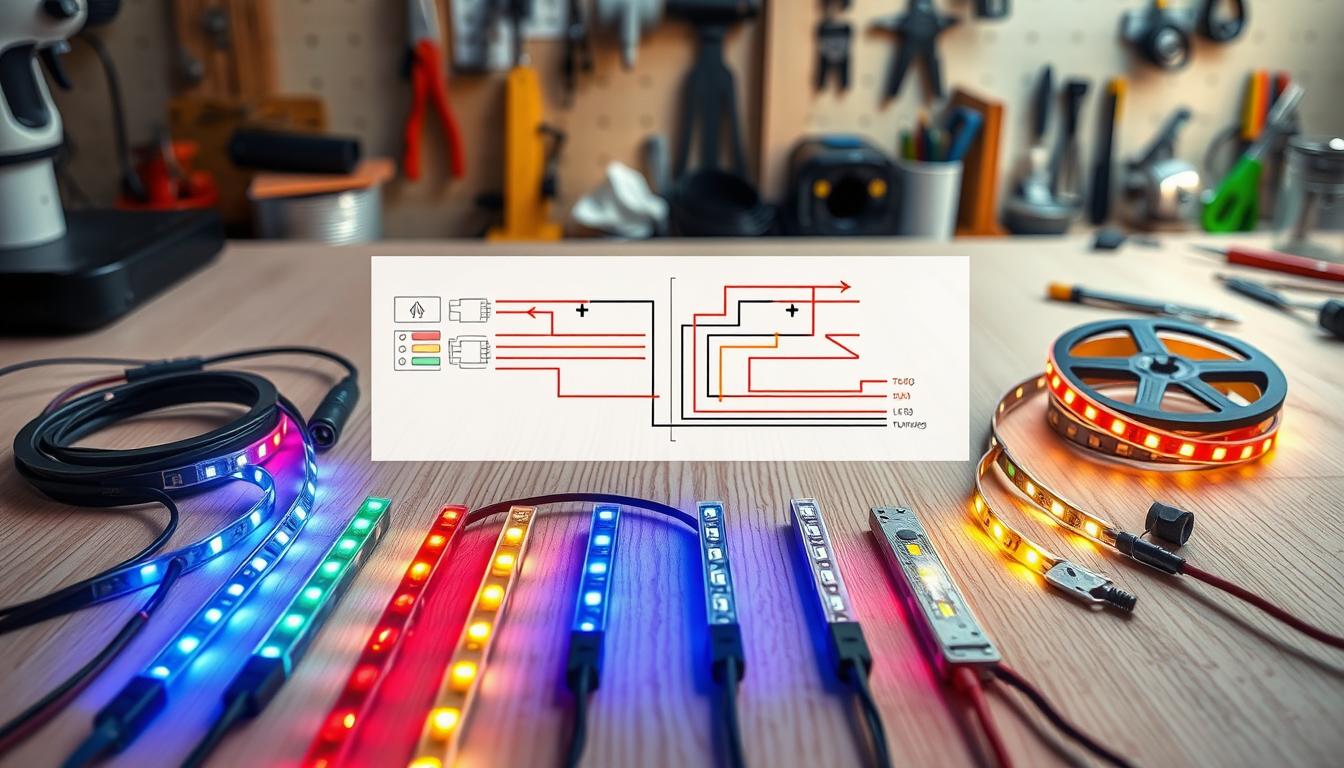
Getting your lighting project right starts with understanding the core wiring requirements. We want to ensure your setup is both safe and efficient, which is why following a reliable LED Strip Light Wiring Guide is so important. By mastering these technical basics, you can avoid common pitfalls and enjoy a beautiful, consistent glow throughout your space.
Understanding Voltage and Power Ratings
The most critical factor in your installation is matching your power supply voltage to your specific LED strips. If the voltage is mismatched, you risk damaging your components or experiencing poor performance. Always verify the labels on your strips before making any final connections.
You should also be aware of voltage drop, which occurs when current travels through long, thin wires. This leads to diminished light output in sections furthest from the power source. To prevent this, we recommend using appropriately gauged wires to minimize resistance and ensure your lights perform at their peak.
Choosing the Right Connector Types
Selecting the correct connectors is essential for a seamless and durable setup. Whether you are using solderless clips or traditional soldering methods, the goal is to maintain a solid electrical connection. Using high-quality connectors helps keep your system stable and prevents flickering over time.
Refer to the table below to choose the right wire gauge for your specific project needs. Proper planning here will save you time and frustration during the assembly process.
| Wire Gauge (AWG) | Max Recommended Length | Best Use Case |
|---|---|---|
| 22 AWG | Up to 5 Meters | Short, accent lighting runs |
| 20 AWG | 5 to 10 Meters | Standard room perimeter lighting |
| 18 AWG | 10 to 15 Meters | Longer runs requiring stability |
| 16 AWG | Over 15 Meters | Professional or commercial installations |
By following this LED Strip Light Wiring Guide, you are well on your way to a successful installation. We are here to help you navigate these technical details with confidence and ease.
Step-by-Step Guide to Connect LED Strip Lights
Transforming your space with multiple light strips starts with a solid plan and the right connections. We have designed this process to be as straightforward as possible, helping you achieve professional results without the stress. Learning how to connect LED strip lights correctly ensures your system remains reliable and efficient for years to come.
First Steps: Measure and Plan
Before you begin, take a moment to measure your target areas accurately. Precision is key to avoiding unnecessary waste and ensuring your layout fits perfectly. Always verify that your power supply can handle the total wattage of all combined strips to prevent performance issues.
Making the Connections
You can use solderless connectors or copper wires to bridge gaps between sections, allowing for a seamless electrical connection. If you prefer a quick and clean finish, a high-quality LED strip light joiner is an excellent choice for linking segments. These tools provide a secure contact point, ensuring your lights stay bright and flicker-free throughout their lifespan.
Testing the Set-Up
We strongly recommend testing your entire configuration before final installation. Simply plug in your LED strip light extension to confirm that every segment is functioning perfectly. This simple check saves time and prevents the frustration of troubleshooting after the strips are already mounted to your walls or furniture. Our team is always here to support you if you encounter any questions during your assembly.
Tips for Seamless Connect Multiple LED Strip Lights
Achieving a seamless glow across your entire space depends on how you manage your power distribution. When you extend your lighting runs, you might notice the light fading toward the end of the strip. This common issue is easily preventable with the right planning and a few professional techniques.
Avoiding Voltage Drop Issues
Voltage drop occurs when the electrical current loses strength as it travels through a long strip. To keep your lights shining at full intensity, we recommend using power injection. This technique involves providing power at multiple points along a long run rather than just at the beginning.
By feeding electricity into the middle or end of your setup, you ensure that every diode receives the same voltage. This simple step keeps your colors vibrant and prevents the dreaded dimming effect that can ruin a custom design. Consistent brightness is the hallmark of a high-quality installation.
Effective Use of Power Supplies
Managing your hardware is just as important as the wiring itself. You can connect multiple LED strips to one power by using a reliable wireless-wifi LED controller to manage your zones. When you need to branch your lighting into different directions, a high-quality LED strip light splitter becomes an essential tool in your kit.
If you are joining two strips end-to-end, a sturdy LED strip light connector will save you time and effort. These components ensure a secure electrical path without the need for complex soldering. Always verify that your power supply capacity exceeds the total wattage of your combined strips to maintain safety and performance.
| Connection Method | Best Use Case | Key Benefit |
|---|---|---|
| Direct Connector | Short, linear runs | Fast and clean |
| Power Injection | Long, continuous runs | Uniform brightness |
| Splitter Cable | Branching layouts | Flexible design |
Common Mistakes to Avoid When Connecting
When you decide to connect multiple LED strips, avoiding common pitfalls is the secret to a professional finish. Even the most experienced installers can occasionally run into issues, but most errors are easily avoidable with a bit of foresight. Our goal is to help you create a reliable, long-lasting lighting system that you can enjoy for years to come.
Incorrect Wiring Practices
One of the most frequent errors occurs when users neglect to verify their wiring polarity. Mixing up positive and negative terminals can prevent your lights from turning on or, worse, cause damage to the sensitive components. We strongly recommend that you double-check every connection before finalizing your installation to prevent any unnecessary troubleshooting later on.
Loose or poorly secured wires are another common culprit behind flickering lights. To ensure a stable setup, always use high-quality connectors or solder your joints securely. Following these simple practices will help you connect multiple LED strips with confidence and precision.
Overloading Power Supplies
A major mistake that often leads to system failure is pushing your power supply beyond its rated capacity. Overloading a unit can lead to excessive heat buildup, noticeable voltage drops, and a significantly shorter lifespan for your LEDs. This is why accurate wattage calculation is vital before you begin your project.
To keep your system running smoothly, consider these essential tips:
- Always calculate the total power draw of all strips combined.
- Add a 20% buffer to your power supply capacity to ensure efficiency.
- Avoid daisy-chaining too many strips in a single series to prevent voltage loss.
By respecting the limits of your hardware, you ensure that your efforts to connect multiple LED strips result in a safe and vibrant display. Taking these extra steps today will save you from maintenance headaches in the future.
Troubleshooting Connection Issues
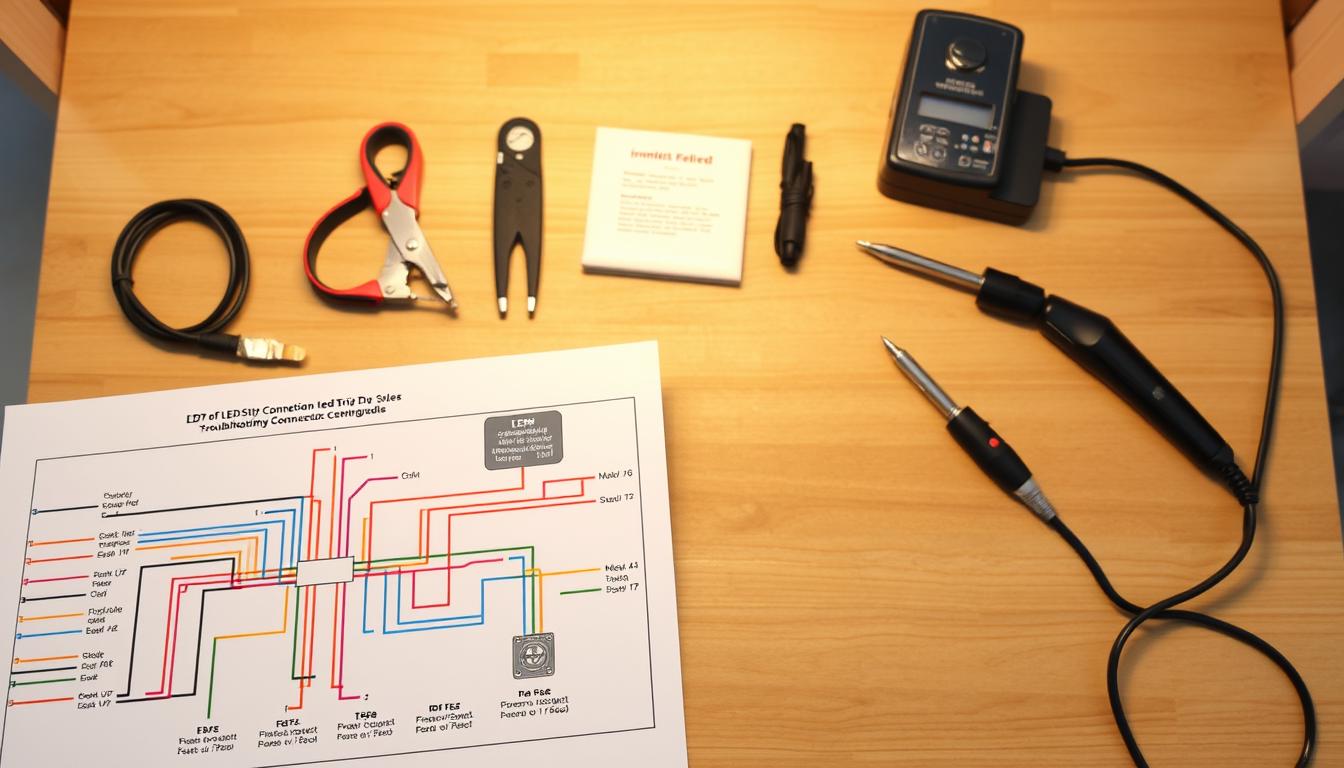
We believe that every lighting challenge is simply an opportunity to refine your setup. If you notice your lights behaving unexpectedly, do not worry, as most technical hurdles have simple and effective solutions. Our comprehensive LED Strip Light Wiring Guide is designed to help you navigate these moments with confidence.
Identifying Common Problems
Most lighting irregularities stem from basic installation oversights rather than faulty hardware. When your system does not perform as expected, we recommend looking at the physical integrity of your setup first.
Common culprits often include the following:
- Loose connections at the junction points or controllers.
- Inadequate power supply capacity for the total length of the strips.
- Corroded or oxidized contact points due to environmental exposure.
- Damaged wiring caused by tight bends or improper handling during installation.
Solutions for Flickering or Dimming
Flickering or dimming in your LED strips is often a clear indicator of a weak power supply or a loose connection that needs immediate attention. By following our LED Strip Light Wiring Guide, you can restore your system to its full, vibrant potential quickly.
Try these steps to resolve performance issues:
- Secure all connections: Ensure every clip and connector is snapped firmly into place to maintain a steady flow of electricity.
- Check power capacity: Verify that your power supply unit provides enough wattage to support the entire length of your LED strips.
- Inspect for voltage drop: If the end of your strip is dimmer than the start, consider injecting power at both ends of the run.
- Clean contact points: Gently wipe the copper pads with a dry cloth to ensure a clean, conductive surface for your connectors.
We are dedicated to ensuring your lighting experience remains smooth and enjoyable from start to finish. If you continue to experience issues after these checks, feel free to reach out for further technical support.
Real-Life Examples of Multi-Strip Configurations
Exploring diverse lighting setups reveals just how versatile a simple LED strip light extension can be in any setting. We often find that seeing how others successfully implement their projects provides the best inspiration for your own unique space. Whether you are upgrading a cozy corner or designing a professional environment, these examples show that your vision is well within reach.
Home Lighting Inspirations
Many homeowners use an LED strip light extension to create ambient glow behind television sets or under kitchen cabinetry. By linking multiple strips, you can achieve a uniform look that highlights architectural features without creating harsh shadows. Consistency is key when you want to elevate the mood of your living room or bedroom.
For those looking to add a touch of luxury, consider installing strips along crown molding or baseboards. This creates a soft, indirect light that makes any room feel larger and more inviting. Always remember to plan your power distribution carefully to ensure every section shines with equal intensity.
Creative Commercial Uses
Businesses often utilize these lighting solutions to draw attention to product displays or create a welcoming atmosphere for customers. A well-placed LED strip light extension can transform a dull retail shelf into a vibrant focal point that captures interest immediately. When working on outdoor signage or patio lighting, safety is our top priority.
For all outdoor installations, we highly recommend using waterproof boxes to protect your power supply and connections from the elements. This simple step ensures your display remains reliable regardless of the weather. The following table highlights common configurations used in various professional settings.
| Application Type | Configuration Style | Primary Benefit |
|---|---|---|
| Retail Display | Series Connection | Uniform Brightness |
| Restaurant Patio | Parallel Wiring | Weather Resistance |
| Office Accent | Zonal Control | Energy Efficiency |
Getting Further Assistance
Mastering the art of connecting multiple LED strip lights transforms any space into a vibrant environment. You now possess the knowledge to plan, wire, and troubleshoot your custom lighting configurations with confidence.
We remain dedicated to supporting your vision from the initial design phase to the final installation. Our team understands that every project carries unique requirements, and we are ready to provide the personalized advice you need to succeed.
Direct Support from IMLTLED
You can explore our full range of innovative lighting solutions by visiting our website at www.imltled.cn. Our experts are available to answer your technical questions and help you select the right components for your specific setup.
Reach out to our friendly support team through WhatsApp at 0086 185 8848 3178 for immediate assistance. You may also send your inquiries via email to info@imltled.cn. We look forward to partnering with you to illuminate your world with simple, efficient, and reliable lighting technology.